The Visual Language of Volcanic Stone: How Texture and Color Define Modern Architecture
Transcending its role as a decorative finish, color is now a vital architectural tool that provides a structure with both its conceptual narrative and a sense of permanent prestige.
A Timeless Spectrum: The Emotional Impact of Natural Hues
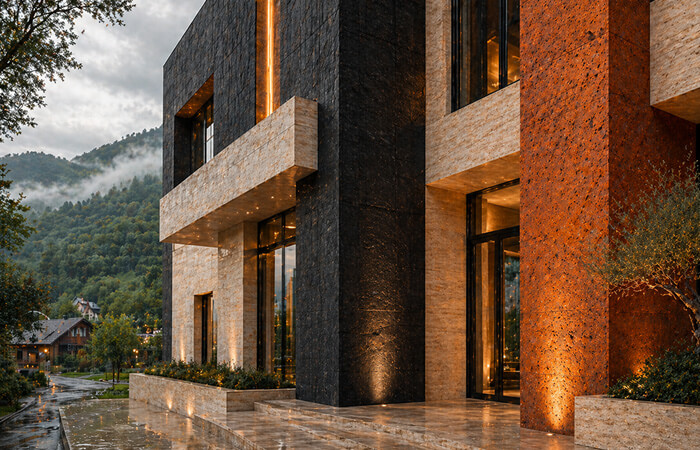
Transcending its role as a decorative finish, color is now a vital architectural tool that provides a structure with both its conceptual narrative and a sense of permanent prestige. The natural palette of volcanic stone offers a sophisticated range that manufactured materials cannot replicate. From the warm, sun-drenched ochres and earthy violets of Tuff to the deep, authoritative charcoal tones of Basalt, these minerals provide a sense of organic permanence. By utilizing these varying chromatic layers, designers can create facades that feel deeply connected to the landscape, offering a visual warmth that shifts gracefully with the changing intensity of natural daylight.
The Interplay of Light and Shadow through Surface Texture
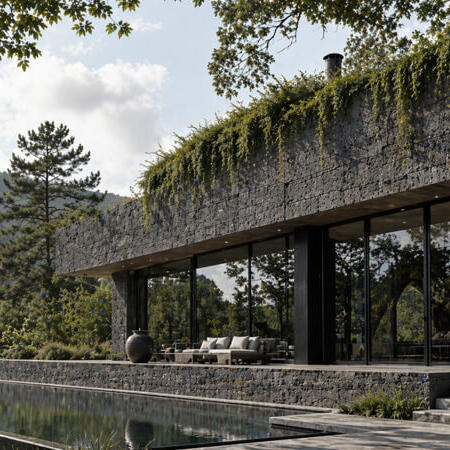
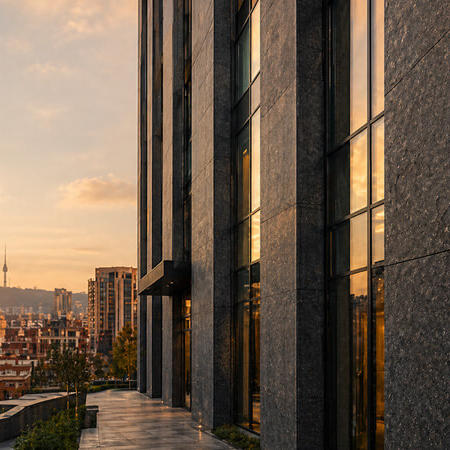
By thoughtfully manipulating the stone's texture, designers can fully express the material's unique mineral density, ensuring its natural character remains a central element of the building's aesthetic identity. Each finish—whether it is the raw, rugged appeal of a sawn surface or the silky, matte elegance of a honed tile—interacts differently with light. While high-relief textures establish a dynamic play of light and shadow across a structure's profile, polished finishes offer a refined, reflective clarity that highlights the complex mineral density of the volcanic stone. This versatility allows architects to sculpt light itself, using the physical grain of the stone to define the mood and atmosphere of both exterior envelopes and interior spaces.
Monolithic Design and the Aesthetic of Permanence
Beyond individual tiles and blocks, the use of volcanic stone enables a "monolithic" approach to design that emphasizes strength and continuity. Through advanced fabrication techniques, these stones can be cut to rigorous tolerances, ensuring seamless transitions and the crisp architectural profiles required for modern, large-scale developments. Through such precise and seamless application, the facade transcends simple cladding to suggest a deeper structural honesty, as if the structure itself were a singular, massive sculpture carved from the earth. This aesthetic of permanence ensures that a structure does not merely exist within its environment but becomes a landmark that gains character and prestige as it ages.